



published at: 02.07.2026
Data Visualization Column: Dr. Helena Jambor to Lead the Relaunched Nature Methods “Point of View” Series
Dr. Helena Jambor, a molecular biologist at the University of Applied Sciences of the Grisons (FH Graubünden) in Chur, Switzerland, and the Faculty of Medicine at TUD Dresden University of Technology, where she is affiliated with the NCT/UCC Dresden, has been invited to lead the relaunched “Point of View” column in Nature Methods. Starting in June, Jambor will contribute a monthly column on data visualization in the life sciences.
The “Point of View” series, which originally ran from 2010 to 2016, has been revived to provide researchers with practical, up-to-date guidance on the effective visualization of scientific data. Jambor was selected for the role in recognition of her internationally acknowledged expertise in data science and data visualization. Together with invited co-authors, she will explore emerging developments in the field and make them accessible to a broad scientific readership.
Data visualization has evolved rapidly over the past decade. New technologies, analytical methods, and visualization tools have transformed the way scientists communicate increasingly complex datasets. According to Jambor, poor visualization choices can have far-reaching consequences: important patterns may be hidden, effects overstated, and uncertainty obscured. “Reproducibility is often discussed in terms of code availability, statistical rigor, and access to data,” she says. “Given their central role in scientific communication, data visualizations and figures should also be an important part of that conversation.”
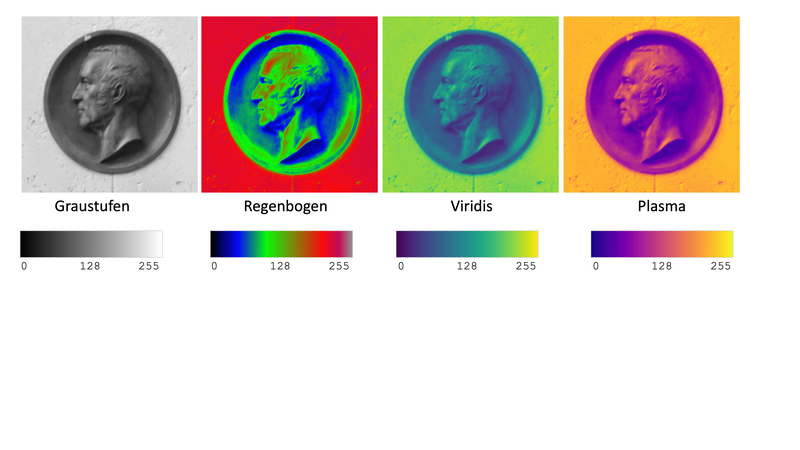
Color scales are a prime example of how visualization choices can influence scientific interpretation. They are used throughout modern medicine: from radiology, where they reveal tissue characteristics and metabolic activity, to cardiology, where they visualize blood flow and arterial blockages. In oncology, color-coded representations of cell populations help determine whether minimal residual disease remains after treatment.
In each of these applications, color directly shapes the interpretation of data and can ultimately influence clinical decision-making. Research has shown that physicians identify clinically relevant features more accurately and efficiently when using perceptually uniform color maps instead of traditional rainbow color scales. In perceptually uniform palettes, perceived brightness changes smoothly and consistently with the underlying data values, ensuring that equal differences in the data produce comparable visual differences. This reduces misleading visual artifacts caused by abrupt color transitions or artificial contrast, allowing structures and trends to be interpreted more faithfully. In medical imaging and diagnostics, such improvements can help clinicians detect disease-relevant features more reliably.
In her inaugural “Point of View” column, Helena Jambor introduces the principles of color scales and traces the development of viridis, a perceptually uniform color map that has become a widely adopted alternative to traditional rainbow palettes.
Read the article: https://rdcu.be/fnPhk
Contact:
Anne-Stephanie Vetter
Staff Unit Public Relations of Carl Gustav Carus Faculty of Medicine
at TUD Dresden University of Technology
National Center for Tumor Diseases (NCT/UCC) Dresden
Tel.: +49 (0) 351 458 17903
anne-stephanie.vetter@tu-dresden.de